3-step framework to make impossible choices and tradeoffs. When perfect isn't available.

I almost didn’t sleep last night.
I’m planning to visit my parents. South Africa to Russia — a long journey on a good day. And right now, it’s not a good day in that part of the world.
Wars in Russia/Ukraine, conflicts in the Middle East I’m flying through.
My mind did what minds do. It went to work worrying.
What if my routines completely fall apart? What if work stalls right when things are finally clicking? What if something breaks on the technology side and I can’t function? What if I get stuck — there’s an actual war happening — and can’t get back?
I started catastrophizing. Quietly, systematically, thoroughly. One worry leading to the next like dominoes I didn’t remember setting up.
I was visualizing everything that could go wrong would.
Then I did something I coach my clients through all the time.
I asked myself, “What I’d tell a friend in this situation?”
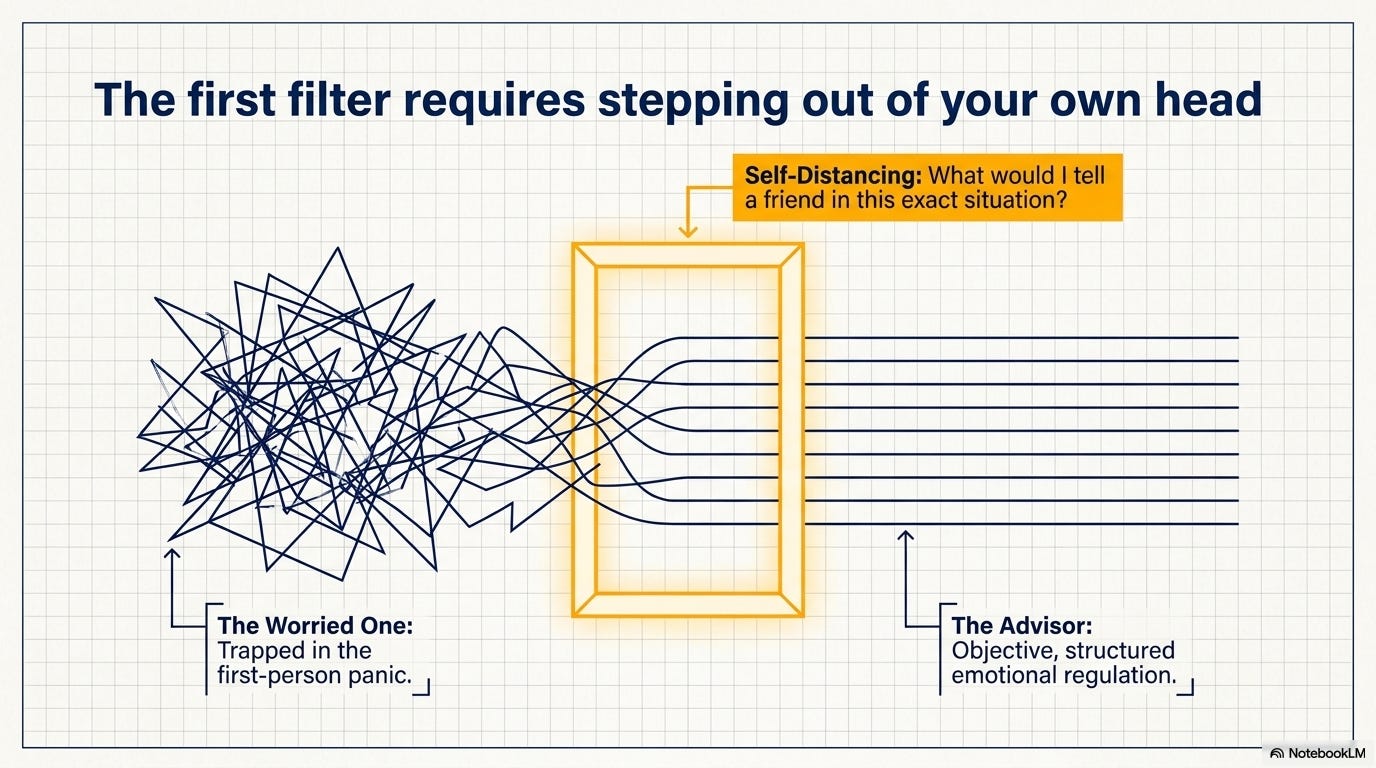
This technique in decision-making and emotional regulation is called self-distancing. Getting out of your own head by stepping into the role of the advisor instead of the worried one. It sounds simple. And it works really well.
So, what would I tell a friend in this exact situation?
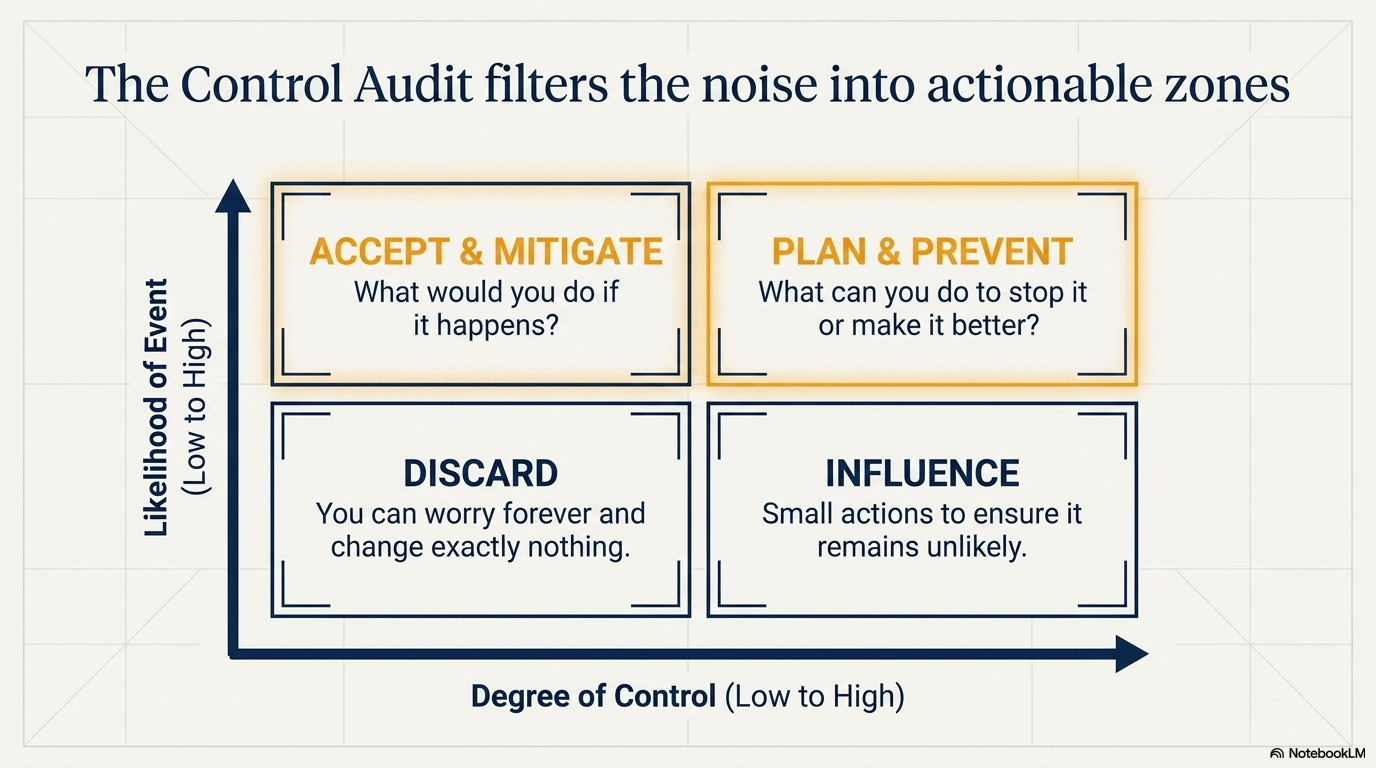
Make a list of your worries. Then ask, how likely is this, really? And if it does happen, what would you do? And which of these can you actually control? And what can you do to prevent things you can influence from happening or make them go better?
I made the list. I answered the questions.
Most of what I was losing sleep over? Completely outside my control. I could worry about it forever and change exactly nothing.
And the second list — the things I could influence — and built a small action plan around those to make them unlikely to happen or go better if they do.
By the time I finished, I was almost laughing at myself.
But then came the harder part.
Some of the concerns weren’t irrational. Some things genuinely weren’t going to go away — the disruption to my routines, the distance from people I care about here, the imperfect conditions for work.
Those weren’t problems I could think my way out of. They required a different question entirely.
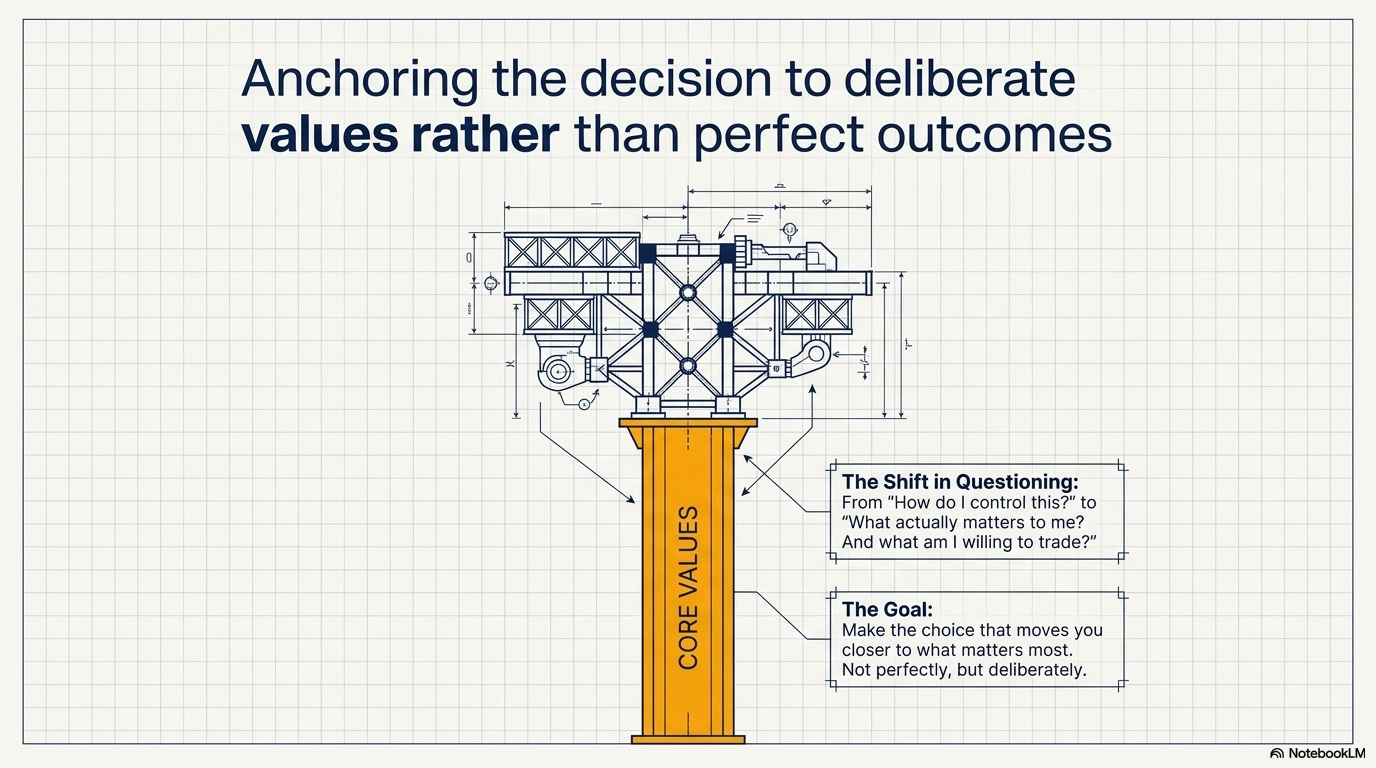
What actually matters to me? And what am I willing to trade?
I value my family deeply. I also love living here, far from them. I value my work and don’t love being pulled away from it AND I know work isn’t everything. I won’t maximize all of it. I can’t. No one can.
What I can do is make the choice that moves me closer to what matters most — not perfectly, but deliberately. In my own version of work-life and values integration.
And when I looked at it openly, through the eyes of that same imaginary friend?
Not visiting isn’t really an option. And things are as aligned as they’re going to get for me to go. The timing is as good as it will be.
So I’m going.
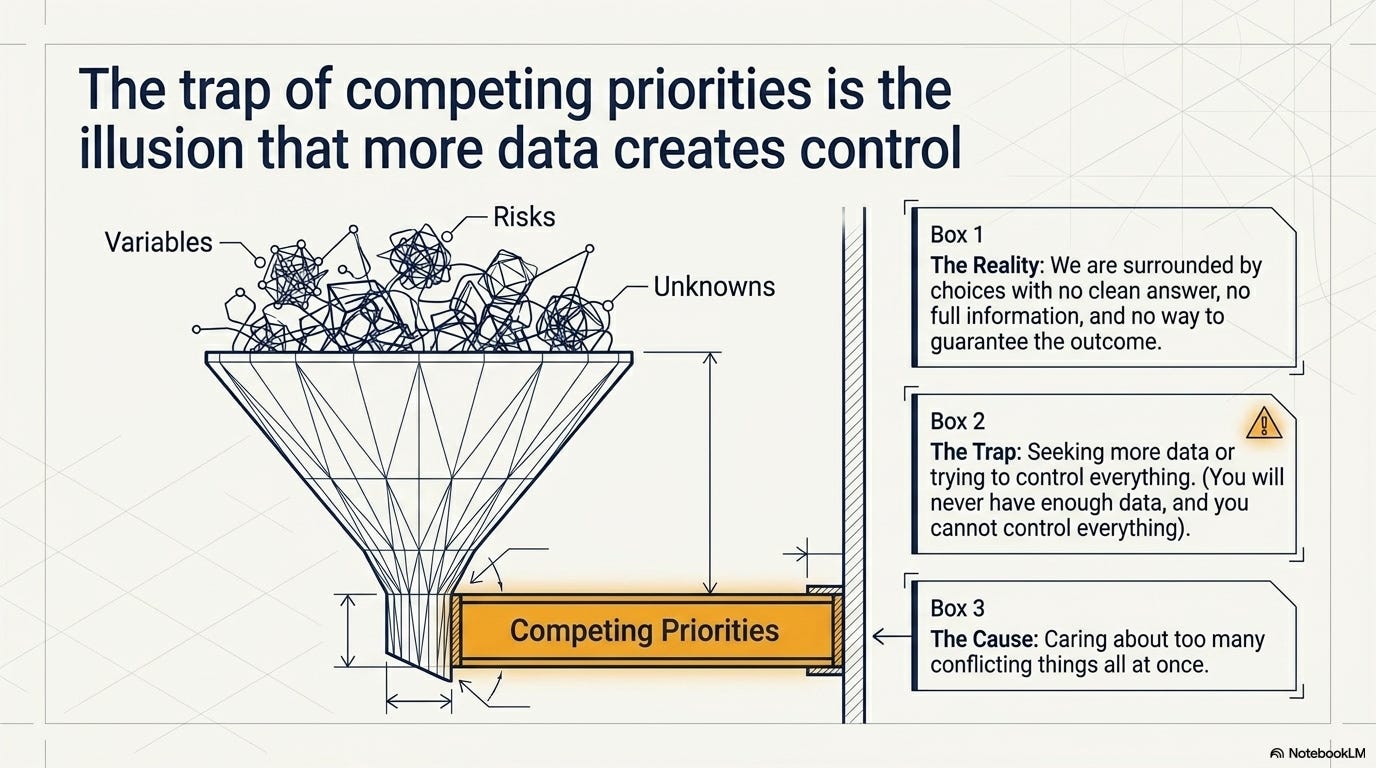
We’re surrounded by seemingly impossible choices. The ones where there’s no clean answer, no full information, no way to guarantee the outcome. The ones that keep us worrying because we care about too many things all at once. Which is a normal human condition. In coaching we call it competing priorities.
The way through isn’t more data. You’ll never have enough. It’s not about controlling everything. You can’t.
It’s about knowing — in advance — what you value most. So when the choice arrives, you’re not deciding from panic. You’re deciding from clarity and alignment of as many things as you can to what matters most to you.
Tradeoffs you are willing to make. And the ones you aren’t.
The perfect answer is almost never available. A better one almost always is.
What’s the impossible choice, decision, tradeoff you’re wrestling with right now — and how can you make it possible when you get clear on what matters most?